
Attracting Dragonflies and Damselflies to Your Pond

Why These Insects Are Worth the Effort
A pond alive with damselflies on a June morning is doing something right. Dragonflies and damselflies are among the most rewarding wildlife you can encourage in a British garden: large, colourful, endlessly watchable, and capable of finding your pond entirely on their own. You cannot stock them the way you stock fish, and you should never move larvae or adults in from elsewhere. Instead you build the right conditions and wait — often only a season or two.
It helps to know which is which. Dragonflies are the powerful, chunky fliers that hold their wings flat and open at rest. Damselflies are slighter, with a slower, fluttering flight, and they fold their wings along the body when settled. Both spend the first part of their lives underwater as predatory larvae, taking a year or more to mature, so a pond that supports them is a pond that is working as a complete ecosystem.
Still Water, Warmth and a Sensible Position
Moving water is the first thing to avoid. Pumps, fountains, waterfalls and spouts all work against you, because larvae are adapted to still or very slow water and the constant disturbance makes life difficult. If you must filter, keep the flow gentle and discharge it below the surface rather than in a cascade.
Sunlight matters almost as much. Aim for a pond that receives direct sun for at least half the day — a south or west-facing position is ideal. Heavy shade keeps water cool, suppresses the plant growth larvae rely on, and delivers a yearly load of leaves that will rot and foul the water. A little dappled shade at one end is fine and useful for cover.
Sizing is more flexible than people expect:
- A pond of around 2m by 2m, with 60–90cm of depth at the centre, will be visited by darters, chasers and the smaller hawkers.
- Damselflies are far less demanding and will breed happily in something the size of a large bath.
- Bigger is genuinely better for dragonflies, but a well-planted small pond beats a bare large one every time.
- Fill with rainwater where you can. Regular tap water top-ups add nutrients and encourage algae.
- Keep fertiliser, pesticide and herbicide runoff away from the pond edge — a planted buffer strip helps.
Planting the Shallows and Margins
If you do only one thing, plant emergent species. These are the plants that grow with their roots in the water and their stems and leaves in the air, and they do double duty: larvae climb them, and adults use them to clamber out of the water when they emerge.
Reliable British choices include yellow flag iris, flowering rush, soft rush, hard rush, sedges, water mint, marsh marigold, bog bean, water forget-me-not and purple loosestrife. Add submerged oxygenators such as hornwort or water milfoil to give larvae hunting cover, and a few floating-leaved plants like water lilies or pondweed for shade and for larvae to haul themselves up on.
Do avoid the invasive non-natives that can swamp a pond — Australian swamp stonecrop, floating pennywort, parrot's feather and water fern. Never take plants from the wild, and never tip out a pond or aquarium into a watercourse. Thin duckweed and blanketweed by hand rather than reaching for chemicals, and leave a section of open water so dragonflies can see their reflections and patrol.
The Fish Question
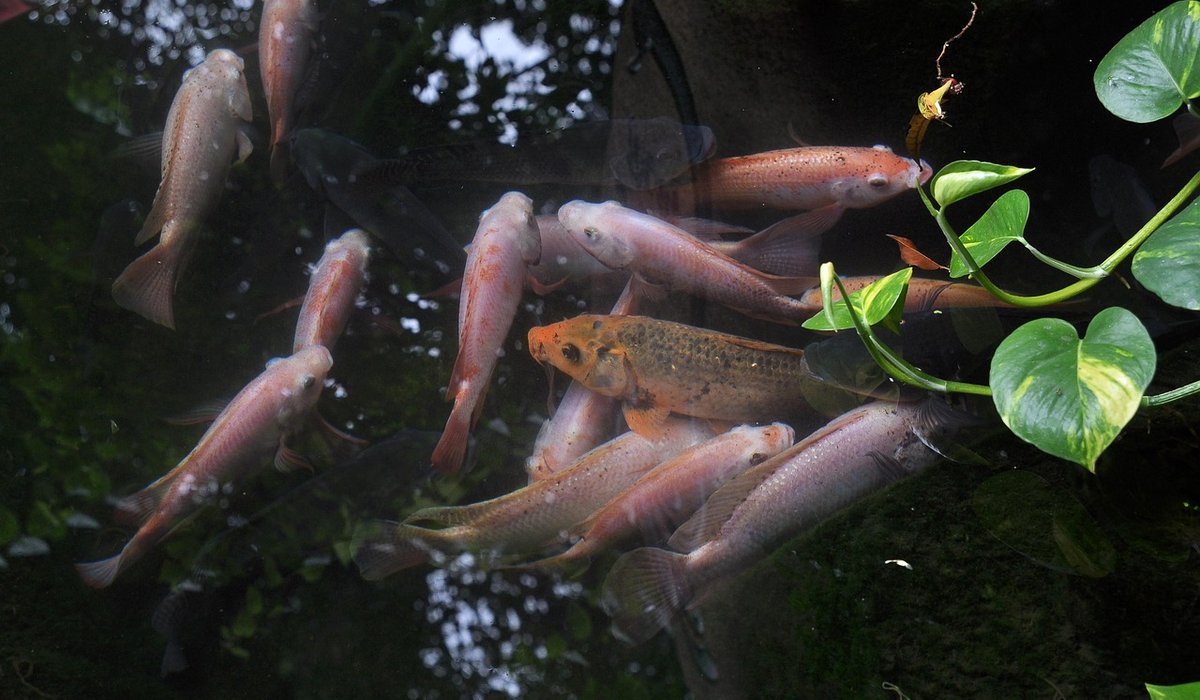
This is the single biggest reason garden ponds fail to produce dragonflies. Fish, even a modest population of goldfish or sticklebacks, will hoover up larvae at a remarkable rate. A well-stocked goldfish pond is usually a near-sterile pond as far as dragonflies are concerned.
The practical advice is straightforward:
- In ponds smaller than roughly 3m by 3m, keep no fish at all if dragonflies and damselflies are your goal.
- If you want fish, keep them in a separate pond and let the wildlife pond stay fish-free.
- Native predators such as newts, diving beetles and water boatmen will take some larvae, and that is entirely natural — a healthy pond is a working food web, not a nursery tank.
- Never introduce non-native fish, and never move fish between ponds or waterways.
A fish-free pond will almost always deliver more damselflies within a couple of years than a fish pond ever will.
Emergence Stems, Basking Spots and Winter Housekeeping
The moment of emergence is precarious. A larva climbs out of the water on a vertical stem, often at dawn, splits its skin and pumps itself up into a full adult. That insect then needs to hang undisturbed for an hour or two while its wings harden. Knock the stem, and it may never fly.
So leave tall, sturdy stems standing — iris, reedmace, rushes and sedges are ideal. Resist the urge to cut everything back in autumn. Standing stems and seedheads provide overwintering cover for larvae and shelter for other wildlife, and they are exactly what next summer's adults will need. Tidy the pond in late spring instead, when the worst of the frost has passed, and leave the cut material on the bank for a day or two so anything clinging to it can crawl back to the water.
Finally, provide warm resting places. Dragonflies bask on flat stones, bare gravel margins, weathered fence posts and dead branches angled over the water, especially on cool mornings before they are warm enough to fly. A gently sloping shallow edge, with stones and gravel, gives emerging larvae an easy route out of the water and gives you somewhere lovely to sit and watch. If you find discarded larval skins — pale, hollow, clinging to a stem — you will know, with certainty, that your pond has become a dragonfly nursery.

Joeby Ragpa
This template is so awesome. I didn’t expect so many features inside. E-commerce pages are very useful, you can launch your online store in few seconds. I will rate 5 stars.
ReplyAlexander Samokhin
This template is so awesome. I didn’t expect so many features inside. E-commerce pages are very useful, you can launch your online store in few seconds. I will rate 5 stars.
ReplyChris Root
This template is so awesome. I didn’t expect so many features inside. E-commerce pages are very useful, you can launch your online store in few seconds. I will rate 5 stars.
Reply