
How to Maintain Clear Water Without Harsh Chemicals

Clear Water Starts with Balance, Not a Bottle
Every spring, garden centres fill up with bottles promising crystal-clear water by the weekend. The trouble is that most of them work by killing something — algae, bacteria, or both — and the nutrients that fed the algae are still sitting in the pond afterwards. Within a fortnight the green is back, often worse than before, and your frogs, newts and dragonfly larvae have paid the price.
Green water is made of microscopic algae. Blanketweed is a filamentous alga. Both live on dissolved nutrients, chiefly nitrates and phosphates, and both need light. Take away the food, shade the surface, and let plants and bacteria do the competing. The water then clears itself. It takes a little longer than a chemical fix, but it lasts.
Plant in Layers, and Plant Generously
Plants are the cheapest filter you will ever own. A well-planted pond strips a surprising amount of nutrient out of the water, and it gives wildlife somewhere to hide, hunt and breed.
- Oxygenators — hornwort, spiked water milfoil, water starwort and curled pondweed grow below the surface and take nutrients straight from the water. Roughly one bunch per square metre of surface area is a good starting point.
- Marginals — yellow flag iris, marsh marigold, purple loosestrife, water mint and flowering rush sit in baskets at the edges, pulling nutrients through their roots and giving amphibians easy cover.
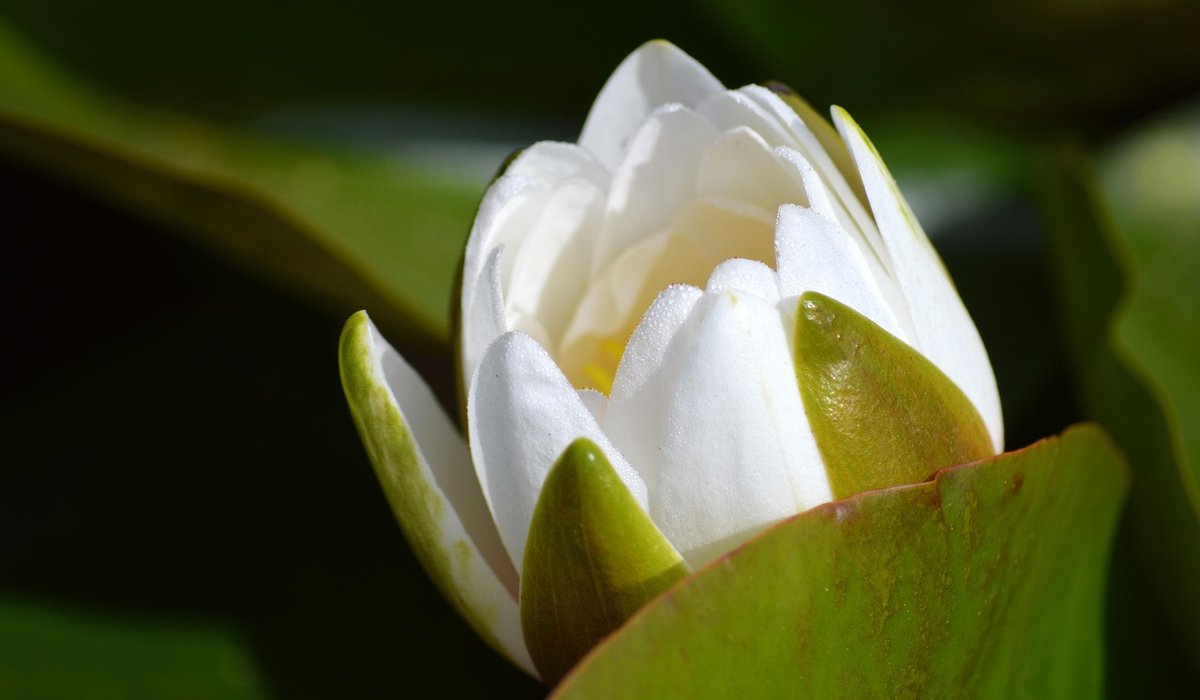
- Floating plants and lilies — native frogbit and water hawthorn are useful, and a small native water lily will shade the surface. Aim for about a third to a half of the water covered at midsummer; more than that and the oxygenators below start to sulk.
One caution: buy native plants only. Invasive non-natives such as Australian swamp stonecrop, floating pennywort and parrot's feather can escape into local waterways, cause real harm, and are very hard to remove once established.
Encourage the Bacteria That Do the Hidden Work
Behind every clear pond is a workforce you cannot see. Nitrifying bacteria colonise every wet surface — gravel, plant baskets, pebbles on the marginal shelf — and convert waste and rotting matter from toxic ammonia into nitrate, which plants then use. Heterotrophic bacteria break down sludge, leaves and uneaten food on the bottom.
You can give them a hand. Add a bacterial culture in early spring, when the water reaches about 10°C, and again after any major clean-out. Never scrub filter media or pond walls: the brown film on a liner is not dirt, it is the filter.
For blanketweed in particular, a mesh bag of barley straw floated in the pond each spring is a long-standing British remedy. It will not work overnight, and it works far better alongside plants and a little shade than on its own.
Gentle Filtration Beats Brute Force
A wildlife pond does not need a filter that turns the whole volume over every hour. That kind of flow suits koi and goldfish, but it also whips up debris, disturbs spawning and drowns the quiet corners that invertebrates need.
A small pump moving the water gently through a sponge or box filter is plenty, as is a planted gravel bog filter at the edge. Something that shifts the pond's volume every two to four hours, pushing water through a bed of gravel and iris, is cheap to run and quietly effective. Solar pumps suit a small pond, running through the middle of the day when algae makes the most of the light. Only consider ultraviolet clarification if you keep fish and have already tried plants, shade and bacteria.
Stay on Top of Debris and Nutrients
Fallen leaves are the single biggest source of pond nutrients in most gardens, and what they release in autumn feeds the algae you see next spring.
- Net the pond in October before the leaves drop, or skim with a fine net every few days.
- Twist a rake or a length of cane through blanketweed to lift it out rather than treating it. Persistence pays.
- Cut back dead marginal foliage in late winter, but leave a few hollow stems standing for overwintering insects.
- Never empty and scrub the pond. A full clean kills the bacteria, the invertebrates and the frogs, and the algae return within weeks.
- Keep lawn fertiliser, grass clippings and pet treatments well away from the pond edge, and do not overfeed any fish.
Top Up with Rainwater, Slowly
Tap water contains chlorine or chloramine, which knocks back your bacterial population, and it also carries the nitrates and phosphates that algae love. In hard water areas it raises the pH too, which some plants dislike.
Rainwater is far better. A water butt plumbed from a shed or greenhouse roof gives you soft, free water all summer. Discard the first flush of a downpour if you can, and avoid water from a roof with lead flashing or heavy moss. Top up in small amounts in the early morning or evening, keeping the level steady rather than rescuing a shrivelled pond in one go. If you must use a hosepipe in a heatwave, let the water stand in a can for a day or use a dechlorinator, and always add it gently.
Do all that and by midsummer you should be able to see the gravel at the bottom — and a good deal of the life that is making it happen.

Joeby Ragpa
This template is so awesome. I didn’t expect so many features inside. E-commerce pages are very useful, you can launch your online store in few seconds. I will rate 5 stars.
ReplyAlexander Samokhin
This template is so awesome. I didn’t expect so many features inside. E-commerce pages are very useful, you can launch your online store in few seconds. I will rate 5 stars.
ReplyChris Root
This template is so awesome. I didn’t expect so many features inside. E-commerce pages are very useful, you can launch your online store in few seconds. I will rate 5 stars.
Reply